
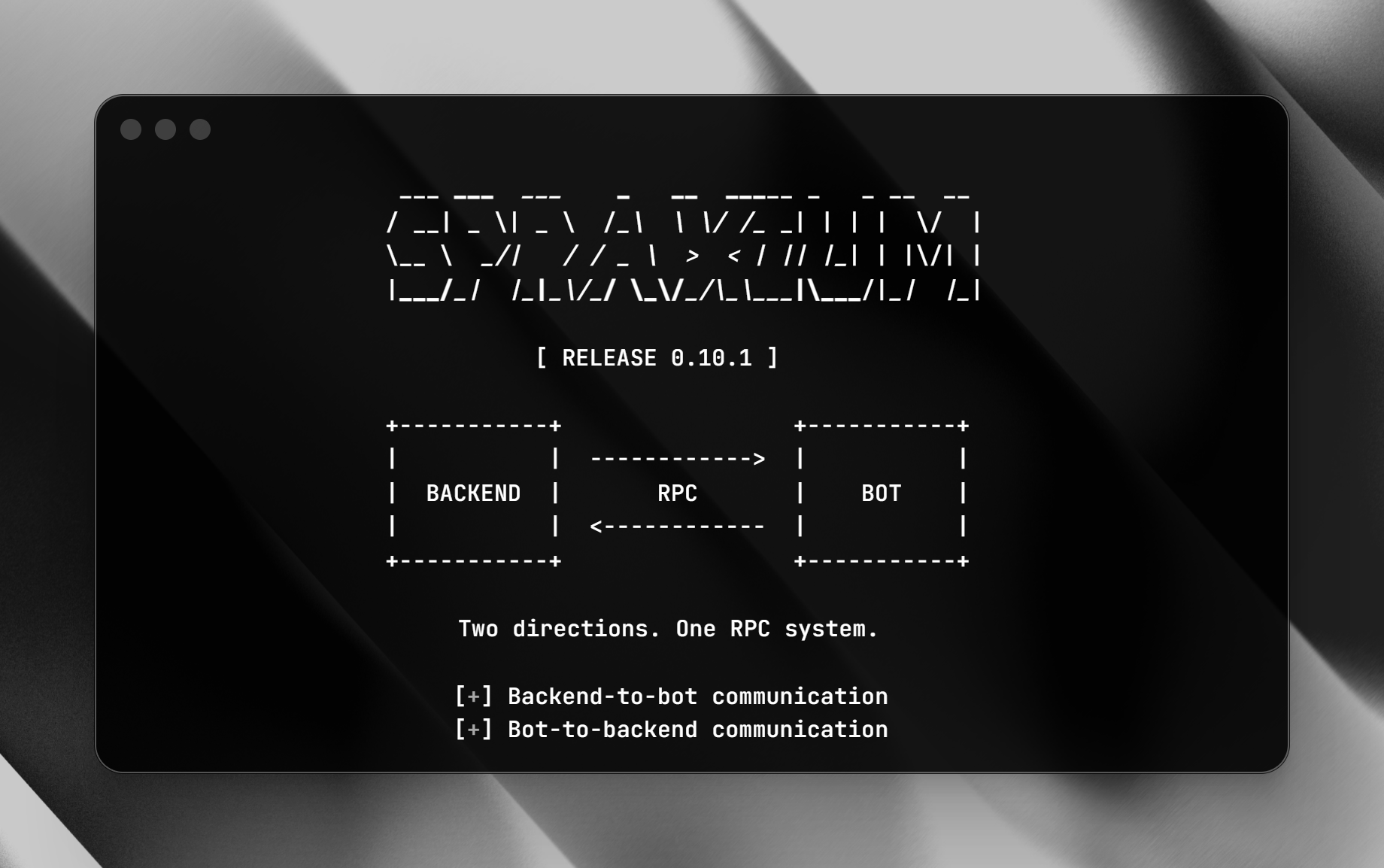
A dashboard can already ask the bot for Discord data. In 0.10.1, the bot can also ask the backend to do work and use the result in a command. A /ticket command, for example, can send the guild and user IDs to your backend, wait for it to save the ticket, then reply with the ticket ID. The incoming gateway on the bot stays the same. Use @spraxium/rpc-server to receive the calls on the backend, alongside the HTTP routes you already have.
The NestJS example includes both directions in one project, with a separate address and credential for each listener. The server package also works in other Node.js backends. If your application only needs backend-to-bot calls, its current setup is enough. Walk through the NestJS example or add a standalone Node gateway.
Signal can now use Redis to check nonces across bot processes. Replicas connected to the same store can agree on whether a webhook delivery has already been seen. Schedule also renews Redis leases while jobs run and checks which process owns the lease before releasing it. That helps long tasks avoid overlapping when you run several shards. Keep jobs safe to retry if they perform work that cannot be repeated. Signal setup · Schedule drivers.
The CLI database templates were updated for the current ORM versions. The checks cover generating a project, preparing the schema, and writing and reading a record in both development and the production build. They cover Prisma, Drizzle, TypeORM, MikroORM and Mongoose across the databases offered by the CLI.